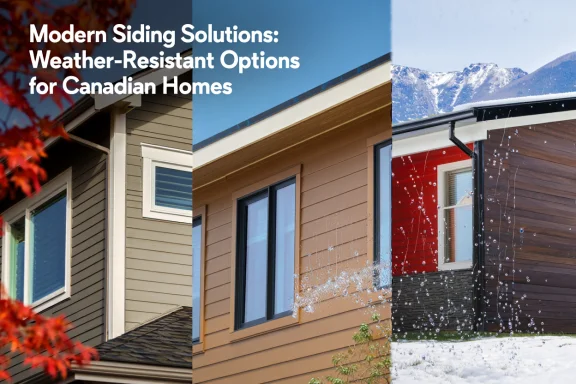
Your home’s siding is like a good winter coat – it needs to look sharp while protecting you from whatever Mother Nature throws your way. From the Atlantic storms of Nova Scotia to the prairie winds of Saskatchewan, Canadian homes face some serious weather challenges. Choosing the right siding material isn’t just about curb appeal (though that matters too) – it’s about finding a solution that’ll stand up to our unique climate while keeping your energy bills from going through the roof.
Understanding Canadian Climate Challenges
Canadian homes deal with temperature swings that would make a yo-yo jealous. In Halifax, you might see +25°C in summer and -25°C in winter – that’s a 50-degree swing your siding needs to handle without cracking, warping, or looking like it went ten rounds with a zamboni.
Key Climate Factors Affecting Siding:
- Temperature fluctuations causing expansion and contraction
- High humidity levels in coastal regions
- UV exposure during those glorious summer months
- Ice, snow, and freeze-thaw cycles
- Wind-driven rain and storms
- Salt air exposure in Maritime provinces
Top Siding Materials for Canadian Homes
Vinyl Siding: The Reliable Workhorse
Vinyl siding remains the most popular choice across Canada, and for good reason. Modern vinyl has come a long way from the flimsy stuff your neighbour installed in the ’80s.
Pros:
- Budget-friendly option (typically $3-8 per square foot installed)
- Low maintenance – just hose it down occasionally
- Won’t rot, rust, or attract insects
- Available in dozens of colours and styles
- Good insulation properties with insulated backing options
Cons:
- Can become brittle in extreme cold
- Colour may fade over time with UV exposure
- Not as environmentally friendly as other options
- Can crack or dent from hail or impact
Best For: Budget-conscious homeowners in most Canadian climates, particularly effective in central and western provinces.
Fiber Cement: The Premium Performer
Fiber cement siding is like the Swiss Army knife of exterior materials – versatile, durable, and ready for anything the Canadian climate can dish out.
Pros:
- Exceptional durability (warranties up to 50 years)
- Fire-resistant properties
- Won’t rot, warp, or attract pests
- Can mimic wood, stucco, or masonry
- Excellent for harsh weather conditions
- Maintains colour better than vinyl
Cons:
- Higher upfront cost ($8-12 per square foot installed)
- Heavier material requiring proper structural support
- Professional installation strongly recommended
- Requires periodic painting (every 10-15 years)
Best For: Homeowners seeking long-term value in challenging climates, particularly coastal areas with salt air exposure.
Composite Siding: The Innovation Leader
Composite materials combine the best of multiple worlds, using recycled materials and advanced manufacturing to create superior performance.
Pros:
- Made from recycled materials (environmentally conscious)
- Excellent insulation properties
- Resists moisture, insects, and temperature extremes
- Low maintenance requirements
- Natural wood appearance without the drawbacks
Cons:
- Premium pricing ($10-15 per square foot installed)
- Limited colour options compared to vinyl
- Newer technology with less long-term performance data
- May require specialized contractors
Best For: Eco-conscious homeowners willing to invest in cutting-edge technology and superior performance.
Regional Considerations Across Canada
Atlantic Provinces
Salt air and high humidity demand materials that resist corrosion and moisture penetration. Fiber cement and high-grade vinyl with proper moisture barriers work best.
Central Canada (Ontario & Quebec)
Temperature extremes and urban pollution require materials that handle thermal cycling and maintain appearance. All three materials perform well with proper installation.
Prairie Provinces
High winds and temperature swings favour materials with excellent structural integrity. Fiber cement and composite options excel in these conditions.
Western Canada
Varied climates from coastal rain to mountain snow require material selection based on specific microclimates. Coastal areas benefit from corrosion-resistant options.
Cost Analysis: What Canadians Actually Pay
Based on 2025 Canadian market data:
Vinyl Siding:
- Material: $2-5 per sq ft
- Installation: $1-3 per sq ft
- Total: $3-8 per sq ft
Fiber Cement:
- Material: $4-7 per sq ft
- Installation: $4-5 per sq ft
- Total: $8-12 per sq ft
Composite:
- Material: $6-9 per sq ft
- Installation: $4-6 per sq ft
- Total: $10-15 per sq ft
Remember to factor in HST/GST (5-15% depending on your province) and potential permit costs ($50-200 in most municipalities).
Installation Timing and Seasonal Considerations
Best Installation Seasons:
- Spring (April-May): Ideal temperatures, contractors available
- Summer (June-August): Peak season, higher prices but predictable weather
- Fall (September-October): Good conditions, potential contractor deals
- Winter: Emergency repairs only in most regions
Weather Windows: Most siding materials shouldn’t be installed when temperatures drop below -10°C or during precipitation. Plan accordingly – this is Canada, after all.
Energy Efficiency and Insulation
Modern siding systems can significantly impact your heating bills. Insulated vinyl can provide R-values up to R-5, while proper installation with house wrap and foam backing can boost overall wall performance.
Energy Savings Potential:
- Proper siding installation can reduce heating costs by 10-20%
- Insulated options provide better performance than standard materials
- Air sealing during installation prevents costly drafts
Maintenance Requirements
Vinyl: Annual washing, occasional caulking touch-ups Fiber Cement: Inspect and paint every 10-15 years, annual cleaning Composite: Minimal maintenance, occasional cleaning and inspection
Making Your Decision
Consider these factors when choosing your siding material:
- Budget: What can you realistically afford upfront and long-term?
- Climate: How harsh are your local conditions?
- Maintenance: How much ongoing care do you want to handle?
- Aesthetics: What look complements your home’s architecture?
- ROI: What will provide the best return on investment?
The right siding choice depends on your specific situation, but don’t cheap out on installation. Even the best materials won’t perform if they’re not properly installed with appropriate moisture barriers and flashing.
Whether you’re battling Maritime storms or prairie winds, modern siding materials offer Canadian homeowners better options than ever before. Take time to research local contractors, get multiple quotes, and choose materials rated for your specific climate zone.
Ready to transform your home’s exterior? Contact local siding professionals for personalized recommendations based on your specific location, budget, and performance requirements. A quality siding installation is an investment that’ll protect and beautify your home for decades to come.