French Doors vs. Sliding Doors: Which is Right for You?
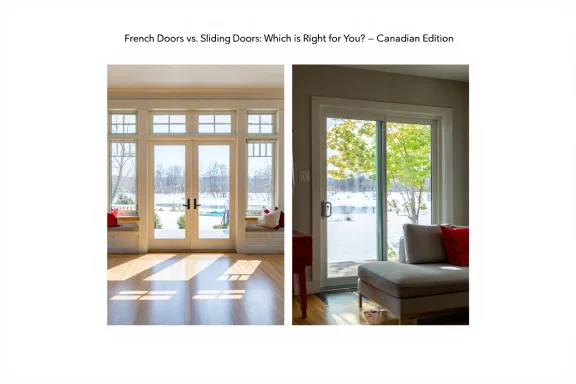
Standing in your living room, staring at that wall where you want to add patio access, and wondering whether French doors or sliding doors are the way to go? You’re not alone, eh. This decision affects everything from your home’s curb appeal to your heating bills, and in Canada’s climate, making the wrong choice can be costlier than a Leafs playoff run.
With Canadian home renovation spending hitting record highs and door replacements being one of the most impactful upgrades you can make, getting this decision right matters. Whether you’re in a cozy Toronto condo, a sprawling Calgary bungalow, or a heritage home in Charlottetown, the right door choice enhances both function and value.
Let’s break down everything you need to know about French doors versus sliding doors, with the kind of practical advice that actually helps Canadian homeowners make smart decisions.
Understanding Your Options: More Than Just Swinging vs. Sliding
French Doors: The Classic Choice
French doors consist of two hinged door panels that swing open, typically featuring extensive glass panels for maximum light and visibility. They originated in 17th-century France (hence the name) and have remained popular for their elegance and functionality.
Key characteristics:
- Dual-panel design: Two doors that meet in the middle
- Extensive glazing: Maximum glass area for light transmission
- Inward or outward swing: Can be configured for space optimization
- Traditional hardware: Classic handles, locks, and hinges
Sliding Doors: The Space-Saving Solution
Sliding patio doors feature large glass panels that slide horizontally on tracks, with one panel typically stationary and the other(s) moving. Modern versions offer significantly improved performance over older sliding door stigmas.
Key characteristics:
- Track-based operation: Smooth horizontal sliding motion
- Large glass areas: Unobstructed views and light
- Space efficiency: No swing radius required
- Contemporary aesthetics: Clean, modern appearance
Space Requirements: The Make-or-Break Factor
French Door Space Considerations
French doors require clearance for their swing radius, which significantly impacts furniture placement and room flow.
Interior space requirements:
- Minimum clearance: 36 inches from door swing to nearest obstacle
- Optimal clearance: 48-60 inches for comfortable operation
- Furniture placement: Must accommodate full door swing arc
- Traffic flow: Consider how open doors affect room circulation
Exterior space considerations:
- Deck/patio size: Ensure adequate space for doors to open fully
- Snow accumulation: In Canadian climates, consider snow depth blocking door operation
- Wind exposure: Strong winds can make door operation difficult or dangerous
- Outdoor furniture: Placement must accommodate door swing
Canadian climate impact: Winter conditions significantly affect French door operation. Snow buildup can prevent doors from opening, and strong winds can catch open doors, potentially causing damage. Many Canadian homeowners install storm doors for additional protection.
Sliding Door Space Efficiency
Sliding doors excel in space-constrained situations, both inside and outside.
Interior advantages:
- Zero swing radius: No interior clearance required
- Furniture flexibility: Can place furniture right up to door area
- Tight spaces: Ideal for small rooms or narrow layouts
- Consistent traffic pattern: Door operation doesn’t affect room flow
Exterior benefits:
- Small patios/decks: Perfect for limited outdoor space
- Snow management: Sliding operation unaffected by snow accumulation
- Wind resistance: Less susceptible to wind-related operational issues
- Minimal exterior clearance: Only need space for maintenance access
Real-World Space Scenarios
French doors work best when:
- Room dimensions exceed 12×12 feet
- Outdoor space allows for full door swing (6+ feet deep)
- Traditional architectural style is desired
- Maximum opening width is priority
Sliding doors are ideal when:
- Interior space is limited (rooms under 12×12 feet)
- Deck or patio depth is less than 6 feet
- Contemporary design aesthetic is preferred
- Easy operation in all weather is essential
Security Features: Protecting Your Canadian Home
French Door Security Considerations
Traditional French door design presents unique security challenges that modern products address with various solutions.
Inherent security challenges:
- Center meeting point: Two doors meeting creates potential weak spot
- Extensive glass: Large glass areas can be vulnerable to breakage
- Multiple lock points: Requires coordination between two door panels
- Swing direction: Outward-swinging doors have exposed hinges
Modern security enhancements:
- Multi-point locking: Three to five lock points per door for enhanced security
- Reinforced frames: Steel or aluminum reinforcement in vulnerable areas
- Laminated glass: Holds together when broken, resists penetration
- Security hinges: Concealed or pin-protected hinges prevent removal
Canadian-specific considerations:
- Insurance requirements: Some insurers offer discounts for enhanced security features
- Vacation property security: Remote locations may require additional security measures
- Climate durability: Security hardware must function in extreme temperature ranges
Sliding Door Security Solutions
Modern sliding doors offer excellent security when properly equipped, overcoming the reputation of older sliding door systems.
Advanced locking systems:
- Multi-point locks: Lock at top, bottom, and center simultaneously
- Anti-lift devices: Prevent door from being lifted off tracks
- Keyed locks: Traditional key operation plus internal security features
- Smart lock integration: Electronic locks with smartphone control
Frame and glass security:
- Reinforced tracks: Heavy-duty aluminum or steel construction
- Impact-resistant glass: Meets hurricane and security standards
- Reinforced corners: Strengthened connection points resist forced entry
- Security bars: Removable bars for additional protection when desired
Installation security factors:
- Proper anchoring: Secure attachment to structural framing
- Weatherproofing integrity: Prevents moisture infiltration that can compromise security
- Professional installation: Ensures all security features function correctly
Security Comparison Summary
French doors security advantages:
- Multiple locking points standard on quality units
- Solid door panels available for enhanced security
- Traditional lock mechanisms familiar to most homeowners
- Storm door addition provides extra security layer
Sliding door security advantages:
- Large, continuous frames resist forced entry
- Modern locking systems extremely robust
- No exposed hinges or meeting points
- Anti-lift and anti-slide features standard
Aesthetic Considerations: Style Meets Function
French Door Aesthetic Appeal
French doors bring timeless elegance and architectural character to Canadian homes.
Design versatility:
- Traditional styling: Perfect for heritage homes and classic architecture
- Contemporary adaptations: Modern materials and hardware options available
- Custom configurations: Various panel arrangements and glass options
- Hardware variety: Extensive handle, lock, and hinge style choices
Visual impact:
- Symmetrical design: Creates balanced, formal appearance
- Architectural detail: Adds visual interest with mullions and panel divisions
- Indoor-outdoor connection: Wide opening creates seamless transition
- Light enhancement: Maximum glass area brightens interior spaces
Material and finish options:
- Wood: Traditional choice with unlimited stain/paint options
- Vinyl: Low maintenance with various color and texture choices
- Aluminum: Contemporary look with durability and slim profiles
- Fiberglass: Wood appearance with superior weather resistance
Sliding Door Contemporary Appeal
Sliding doors excel in modern, minimalist design schemes popular in contemporary Canadian homes.
Clean aesthetics:
- Uninterrupted sight lines: Large glass panels create seamless views
- Minimal visual disruption: Sleek profiles don’t dominate room design
- Contemporary materials: Aluminum and vinyl suit modern architecture
- Color coordination: Wide range of colors to match home exterior
Architectural integration:
- Modern home styles: Perfect complement to contemporary design
- Open concept living: Enhances spacious, flowing interior layouts
- Minimalist appeal: Clean lines support uncluttered design philosophy
- Technology integration: Compatible with smart home automation systems
Regional Style Preferences
Ontario/Quebec preferences:
- French doors popular in heritage areas (Old Montreal, Niagara-on-the-Lake)
- Sliding doors favored in urban condos and modern suburbs
- Climate considerations influence material choices
Western Canada trends:
- Mountain and lakefront homes often feature French doors for rustic appeal
- Urban centers embrace sliding doors for contemporary aesthetics
- Large openings popular for capturing mountain/ocean views
Atlantic Canada characteristics:
- Traditional architecture favors French door styling
- Storm resistance increasingly important in door selection
- Heritage property restrictions may limit options
Northern territories considerations:
- Extreme weather performance trumps aesthetic preferences
- Limited supplier options may restrict style choices
- Professional installation essential regardless of style
Installation Complexity: What You’re Getting Into
French Door Installation Challenges
French door installation involves more complex considerations than simple door replacement.
Structural requirements:
- Header sizing: Must support weight of two doors plus wind/snow loads
- Framing modifications: May require structural changes for proper fit
- Foundation considerations: Threshold installation may require concrete work
- Load-bearing assessment: Professional evaluation often required
Installation steps:
- Structural assessment: Determine if existing opening accommodates new doors
- Framing modification: Adjust opening size and add proper support
- Weatherproofing preparation: Install moisture barriers and flashing
- Door installation: Mount, align, and secure both door panels
- Hardware installation: Install locks, handles, and weatherstripping
- Final adjustments: Ensure proper operation and weatherproofing
Common complications:
- Out-of-square openings: Older homes often require significant adjustment
- Insulation challenges: Proper insulation around frame requires skill
- Weatherproofing complexity: Multiple seal points require careful attention
- Hardware coordination: Both doors must operate in perfect coordination
Sliding Door Installation Factors
Sliding door installation, while different from French doors, presents its own technical requirements.
Track system requirements:
- Level installation: Critical for smooth operation and weatherproofing
- Structural support: Header must support door weight and wind loads
- Drainage integration: Proper slope and drainage prevent water infiltration
- Adjustment mechanisms: Built-in adjustability for settling and alignment
Installation process:
- Opening preparation: Ensure level, square opening with proper drainage
- Track installation: Mount track system with precise alignment
- Door panel installation: Install and adjust door panels for proper operation
- Weatherproofing completion: Install all seals and weatherstripping
- Hardware setup: Install locks, handles, and security features
- Final testing: Verify smooth operation and weather resistance
Technical considerations:
- Track drainage: Essential for Canadian climate moisture management
- Thermal expansion: Account for material movement in temperature extremes
- Wind load resistance: Proper anchoring for high-wind areas
- Glass handling: Large panels require special handling and equipment
DIY vs. Professional Installation
French door DIY feasibility:
- Skill level required: Advanced carpentry and construction knowledge
- Tool requirements: Significant tool investment for proper installation
- Time commitment: 2-3 days for experienced DIYers
- Risk factors: Structural modification mistakes can be expensive
Sliding door DIY considerations:
- Moderate difficulty: Less structural work but precision required
- Special tools needed: Heavy-duty lifting equipment for large panels
- Time requirement: 1-2 days for skilled DIYers
- Critical factors: Level installation and proper weatherproofing essential
Professional installation benefits:
- Warranty protection: Installation warranties often require professional work
- Insurance considerations: Some policies require professional installation
- Code compliance: Ensures all building codes and permit requirements met
- Quality assurance: Professional experience prevents costly mistakes
Energy Efficiency: Keeping Canadian Heating Bills Manageable
Thermal Performance Factors
Both door types can achieve excellent energy efficiency when properly specified and installed.
Key performance metrics:
- U-factor: Heat transfer rate (lower is better)
- Air leakage: Infiltration rate (lower is better)
- Solar heat gain coefficient: Solar energy transmission
- Visible transmittance: Light transmission without heat
Canadian climate considerations:
- Extreme temperature differentials: Greater challenge than moderate climates
- Long heating season: 6-8 months in most Canadian regions
- High energy costs: Efficiency improvements have greater impact
- Building code requirements: Vary by province and climate zone
French Door Energy Performance
Efficiency advantages:
- Solid panel options: Combination of glass and solid panels reduces heat loss
- Multi-point weatherstripping: Multiple seal points enhance air tightness
- Storm door compatibility: Additional layer improves overall performance
- Frame material flexibility: Can choose optimal frame materials for climate
Efficiency challenges:
- Center meeting point: Potential air leakage where doors meet
- Hardware penetrations: Locks and handles create thermal bridges
- Operating seals: More complex weatherstripping systems
- Installation complexity: More opportunities for air leakage if poorly installed
Sliding Door Energy Performance
Efficiency advantages:
- Continuous seals: Fewer potential air leakage points
- Large frame members: Room for substantial insulation in frames
- Modern glazing systems: Excellent glass performance available
- Precision manufacturing: Factory-controlled quality ensures consistent performance
Efficiency considerations:
- Track drainage: Drainage systems can create thermal bridges
- Rolling mechanisms: Moving parts require careful sealing
- Frame materials: Thermal performance varies significantly by material choice
- Installation precision: Requires perfect alignment for optimal performance
Maximizing Energy Performance
For both door types:
- Triple-pane glass: Standard for Canadian climate applications
- Low-E coatings: Optimize for heating-dominated climate
- Argon gas fills: Improve insulation without affecting visibility
- Thermally broken frames: Prevent heat transfer through frame materials
Professional installation essentials:
- Continuous air barrier: Proper integration with house wrap/vapor barrier
- Insulation integration: No gaps in insulation around door frames
- Flashing details: Prevent moisture infiltration that degrades performance
- Quality weatherstripping: Use materials rated for Canadian temperature extremes
Cost Analysis: Investment and Value Considerations
Initial Purchase and Installation Costs
French door cost factors:
- Basic vinyl units: $800-$1,500 per set
- Mid-range wood/fiberglass: $1,500-$3,000 per set
- Premium materials: $3,000-$6,000+ per set
- Installation costs: $500-$1,500 depending on complexity
Sliding door cost factors:
- Basic vinyl units: $600-$1,200 per set
- Mid-range aluminum: $1,200-$2,500 per set
- Premium materials: $2,500-$5,000+ per set
- Installation costs: $400-$1,200 depending on size
Additional cost considerations:
- Structural modifications: $200-$2,000+ if required
- Permits: $50-$300 in most Canadian municipalities
- Storm doors: $300-$800 for French door applications
- Electrical work: $200-$500 if adding lighting or outlets
Long-Term Value and Maintenance
Maintenance requirements:
- French doors: More complex hardware requires regular attention
- Sliding doors: Track cleaning and adjustment needed periodically
- Both types: Annual weatherstripping inspection and replacement
Lifespan expectations:
- Quality French doors: 25-40 years with proper maintenance
- Quality sliding doors: 20-35 years with proper maintenance
- Budget options: 15-25 years regardless of type
Resale value impact:
- French doors: Generally higher perceived value, especially in traditional homes
- Sliding doors: Better acceptance in contemporary homes and condos
- Both types: Quality installation and condition matter more than style
Making Your Decision: A Practical Framework
Prioritizing Your Needs
Choose French doors if:
- Aesthetic appeal and traditional styling are priorities
- You have adequate interior and exterior space
- Maximum opening width is important
- Your home’s architecture suits traditional door styles
- You don’t mind more complex maintenance requirements
Choose sliding doors if:
- Space efficiency is crucial (interior or exterior)
- Contemporary aesthetics match your home style
- Easy operation in all weather conditions is important
- Lower maintenance requirements are preferred
- Budget constraints favor the typically lower-cost option
Regional and Climate Considerations
Prairie provinces:
- Wind resistance favors sliding doors
- Snow accumulation may affect French door operation
- Extreme temperatures require high-performance units regardless of type
Coastal regions:
- Salt air corrosion resistance important for both types
- Hurricane resistance may favor sliding doors in some applications
- Moisture management critical for long-term performance
Northern territories:
- Extreme performance requirements limit options
- Professional installation essential regardless of choice
- Local supplier availability may influence decision
Professional Consultation Benefits
When to consult professionals:
- Structural modifications required
- Uncertain about energy code compliance
- Installing in heritage or regulated properties
- First major door replacement project
Questions for contractors:
- Experience with your specific door type and climate
- Warranty terms for both product and installation
- Timeline and weather considerations for installation
- Maintenance requirements and long-term support
Your Path to the Perfect Door Choice
Choosing between French doors and sliding doors ultimately comes down to matching your specific needs, space constraints, aesthetic preferences, and budget to the right solution. Both options can provide excellent performance when properly selected and installed for Canadian conditions.
The key is honest assessment of your priorities. If you love the look of French doors but have limited space, you might need to prioritize function over form. Conversely, if you have ample space and want maximum visual impact, French doors might be worth the extra complexity and cost.
Remember that this is a long-term investment in your home’s comfort, efficiency, and value. Quality products professionally installed will serve you well for decades, while budget shortcuts often lead to ongoing problems and premature replacement.
Ready to make your choice? Start by measuring your available space, both interior and exterior. Consider your home’s architectural style and your personal preferences. Get quotes from reputable contractors for both options, and don’t be afraid to ask detailed questions about performance, maintenance, and long-term value.
Whether you choose the classic elegance of French doors or the contemporary efficiency of sliding doors, make the decision with confidence, knowing you’ve considered all the factors that matter in Canadian homes. Your perfect door solution is out there – now you have the knowledge to find it.